
Durable Flooring That Resists Daily Wear
Epoxy flake system installation for residential and commercial properties in San Diego
Your garage or workspace in San Diego sees constant traffic, spills, and temperature shifts that cause ordinary concrete to crack and stain. Epoxy flake systems bond directly to prepared concrete and create a seamless surface that holds up under vehicle weight, tool drops, and moisture exposure without chipping or peeling.
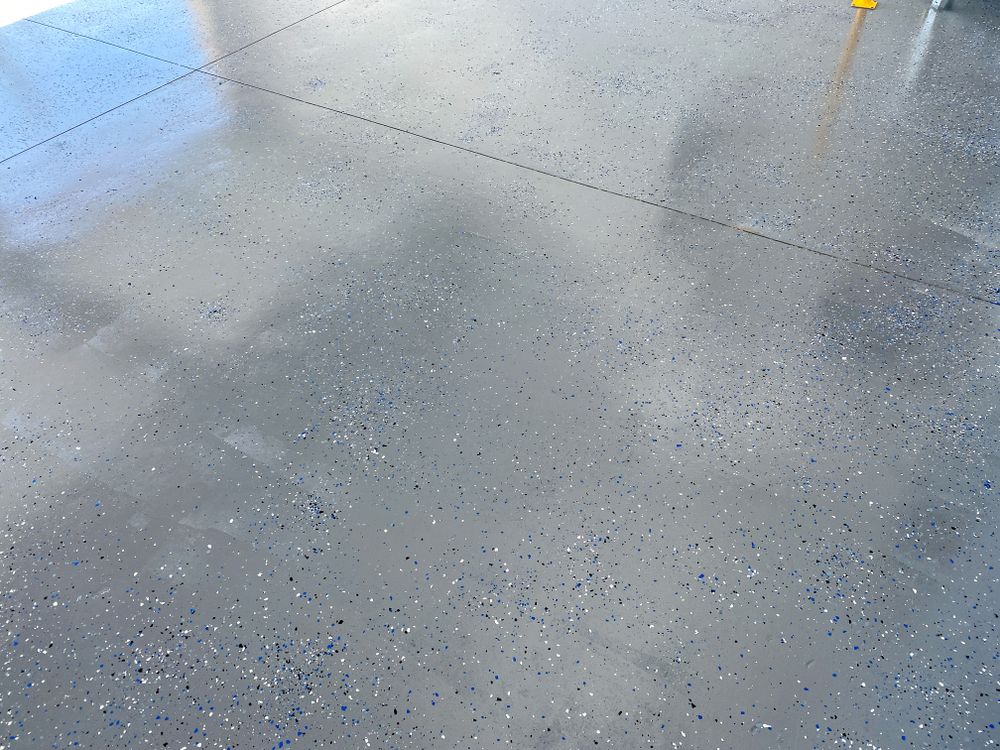
Cal Coast Coatings installs epoxy flake systems by grinding the concrete to remove contaminants, applying a base coat of epoxy resin, broadcasting decorative vinyl flakes across the wet surface, and sealing everything with a clear topcoat. The flakes come in different color blends and sizes, and they add texture that improves traction when the floor is wet. The company backs residential installations with a ten year warranty and commercial projects with a three year warranty, covering delamination and coating failure under normal use.
If you need a floor system that performs in San Diego conditions and looks finished, contact Cal Coast Coatings to review your space and schedule an installation.
What happens during a flake system installation
The crew starts by grinding your concrete slab in San Diego to open the pores and remove oil, dirt, or previous coatings that would prevent adhesion. After vacuuming the dust, they apply a pigmented epoxy base coat using rollers and notched squeegees to control thickness. While the epoxy is still tacky, they broadcast vinyl flakes by hand or with a hopper until the surface is fully covered.
Once the base cures, loose flakes are scraped off and the floor is lightly sanded to knock down any sharp edges. You will see a uniform, multicolored surface that hides small imperfections in the concrete and reflects overhead lighting. The final clear polyurethane or polyaspartic topcoat adds gloss and protects the flakes from abrasion and UV fading.
The entire process typically takes two to three days depending on square footage and temperature, and the floor is ready for light foot traffic within 24 hours of the topcoat. Full cure, which allows vehicle traffic and heavy use, happens after seven days. The flakes stay embedded in the resin and do not loosen or shift over time.
Questions homeowners and property managers ask before installation
People who are considering epoxy flake systems often want to know how the floor will hold up in real conditions, what preparation is required, and whether the coating works in both residential garages and commercial spaces.
What makes epoxy flake systems more durable than paint or stain? Epoxy chemically bonds to concrete at a molecular level, creating a coating that resists peeling and impact. Paint and stain sit on the surface and wear off under tire traffic and tool use.
How do you prepare concrete that has oil stains or existing coatings? The crew uses a diamond grinder to remove the contaminated layer and expose fresh concrete. Oil that has soaked deep into the slab is treated with a degreaser before grinding.
Why do some flake systems have more texture than others? Texture depends on flake size and broadcast density. A full broadcast with larger flakes creates a rougher surface that improves slip resistance, while partial broadcasts with smaller flakes give a smoother finish.
When should I choose a flake system over solid color epoxy? Flake systems hide minor concrete cracks and surface variations better than solid color because the random pattern breaks up visual imperfections. They also provide better traction when wet.
How long does the warranty cover in residential versus commercial settings? Cal Coast Coatings offers a ten year warranty for residential installations and a three year warranty for commercial projects. The difference reflects the higher traffic and heavier wear in commercial environments.
Epoxy flake systems installed by Cal Coast Coatings give you a finished floor that handles the conditions inside San Diego garages, workshops, and retail spaces without requiring constant maintenance. Reach out to discuss your project timeline, color options, and site-specific preparation needs.